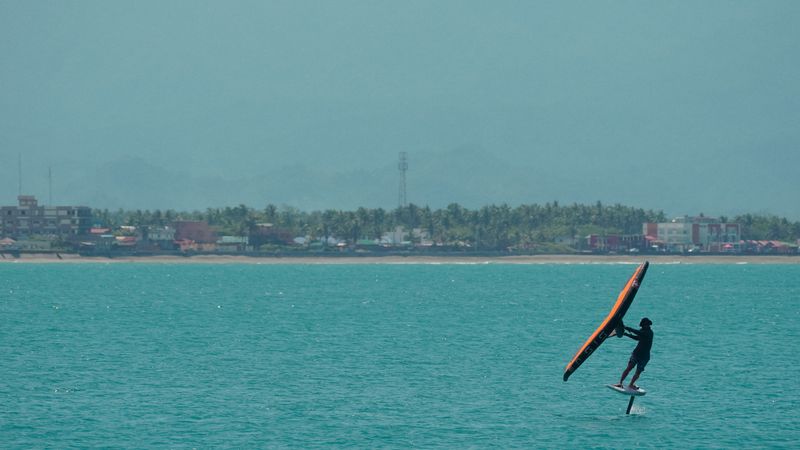
Parawing: qué es, cómo se usa y si conviene más que el wing en Argentina
Por el equipo de Escuela de Wingfoil · Septiembre 2026
Si seguís cuentas de foil en Instagram, seguro lo viste: riders bajando olas kilómetros y kilómetros con un ala chiquita en la mano que, cuando no la necesitan, se guarda en la cintura. Eso es el parawing, la categoría que más creció en el mundo del foil en 2026. En esta guía te contamos qué es, en qué se diferencia del wing, para quién sirve (y para quién todavía no) y cómo probarlo en Argentina.
Qué es el parawing
Un parawing es un ala blanda, sin cámaras de aire ni barras, que se sostiene con dos manijas unidas al ala por un bridaje de líneas cortas. Nació del mundo del parapente y del kite: toma forma cuando se llena de viento, igual que una cometa, pero la manejás a mano como un wing.
Su gran truco es que se puede soltar de tracción en segundos. Cuando agarrás una ola o un swell y ya no necesitás potencia, la dejás flotar arriba tuyo, la enrollás o la guardás, y seguís surfeando solo con el foil. Por eso explotó en el downwind: esas travesías a favor del viento donde lo que te mueve es la energía del agua, no el ala.
Parawing vs wing vs kite
| Parawing | Wing | Kite foil | |
|---|---|---|---|
| Estructura | Blanda, sin inflar | Inflable (leading edge + strut) | Inflable o de cajones, con líneas largas |
| Transporte | Entra en una mochila o riñonera | Bolso mediano + inflador | Bolso + barra + inflador |
| Contra el viento | Mejora cada año, pero cuesta más | Muy bueno | Excelente |
| Downwind | Su terreno natural | Bueno, el ala molesta al surfear | Bueno |
| Para principiantes | No | Sí, es la mejor puerta de entrada | Con escuela |
En pocas palabras: el wing sigue siendo el ala más completa para aprender y navegar en cualquier dirección. El parawing es la herramienta para cuando ya foileás bien y querés viajar liviano o bajar olas sin cargar un ala inflada en la mano.
Para quién sirve (y para quién todavía no)
- Te conviene si: ya navegás con wing o kite foil, hacés trabuchadas en foil y te tienta el downwind o viajar con un equipo que entra en la valija.
- Esperá si: todavía estás aprendiendo a levantarte en foil. El parawing tiene menos potencia de arranque y es menos tolerante a los errores; con un wing vas a progresar mucho más rápido.
Si estás en esa etapa, primero pasá por cómo levantarte en foil paso a paso y cuántas clases necesitás para salir solo.
Cómo se usa: lo básico
- Armado: lo sacás de la bolsa, desenredás el bridaje y listo. No hay que inflar nada.
- Despegue: se levanta desde el agua con el ala a favor del viento, tirando suave de las manijas hasta que se llena.
- Navegación: se maneja con las dos manos, más cerca del cuerpo que un wing. Con una tabla chica y un foil de bajo arrastre se arranca con menos viento del que parece.
- Modo surf: cuando agarrás un swell, soltás una manija, el ala se despotencia y seguís solo con el foil. Muchos riders la guardan en un cinturón para bajar olas largas.
El error más común de quien viene del wing es tirar de las manijas como si fueran una botavara: el parawing pide movimientos más suaves, porque si lo forzás se desinfla en el aire.
Dónde probarlo en Argentina
- Río de la Plata: los días de sudeste arman ondas cortas ideales para practicar downwind costero entre Vicente López y San Isidro. Mirá antes el nivel del río y combiná con alguien que te espere en la llegada.
- Costa Atlántica: Mar del Plata y la costa bonaerense tienen el swell que hace brillar al parawing. Ojo con las corrientes de retorno.
- Cuesta del Viento y Potrerillos: viento térmico, parejo y fuerte, bueno para agarrarle la mano al manejo del ala. Más en nuestra guía de viento térmico.
Para el resto de los lugares, tenés la guía de mejores spots de wingfoil en Argentina.
Precio y dónde conseguirlo
Todavía hay poca oferta en el país y casi todo es importado. Como referencia internacional, un parawing nuevo suele costar entre USD 800 y 1.500 según la marca y el tamaño, más el foil y la tabla que probablemente ya tengas. Los tamaños más usados van de 3 a 5 m².
Antes de comprar, revisá el buscador de equipos en venta y nuestra guía para comprar en Mercado Libre. Si es usado, aplicá la misma lógica que con un wing: mirá costuras, bridaje y que la tela no esté porosa (qué revisar en equipo usado).
Seguridad en downwind
- Nunca salgas solo a un downwind: coordiná la vuelta antes de entrar.
- Llevá chaleco, casco y el celular en una funda estanca.
- Si el viento cae, el parawing no te va a llevar de vuelta contra el viento tan fácil como un wing: planificá el recorrido a favor.
La guía completa está en ¿Es peligroso el wingfoil?.
Preguntas frecuentes
¿Puedo aprender directamente con parawing?
No lo recomendamos. Aprender a foilear con un wing es más rápido y más seguro. El parawing se disfruta cuando ya foileás con soltura.
¿Reemplaza al wing?
Para algunos riders avanzados sí, sobre todo en downwind y viajes. Para navegar ida y vuelta en el río, el wing sigue siendo más cómodo.
¿Qué tabla y foil necesito?
Sirven la tabla y el foil que ya usás con el wing. Con el tiempo, muchos pasan a tablas más chicas y alas de foil de alta relación de aspecto, que planean con menos velocidad.
¿Cuánto viento necesita?
Depende del tamaño del ala y del foil, pero en general funciona desde unos 12 a 15 nudos. En downwind, lo que importa además es que haya ondas para surfear.
¿Querés probar? Consultá a los instructores en la sección Instructores.
If you follow foil accounts on Instagram, you've seen it: riders gliding down swell for miles with a tiny wing in hand that, when they don't need it, gets tucked into their waist. That's the parawing, the fastest-growing category in foiling in 2026. This guide covers what it is, how it differs from the wing, who it's for (and who should wait) and how to try it in Argentina.
What a parawing is
A parawing is a soft wing with no air bladders or struts, held with two handles attached by a short bridle. It comes from the paragliding and kite world: it takes shape when it fills with wind, like a kite, but you fly it by hand like a wing.
Its big trick is that you can depower it in seconds. Once you catch a swell and no longer need power, you let it float overhead, roll it up or stow it, and keep riding on the foil alone. That's why it took off in downwinding: runs with the wind where the water's energy moves you, not the wing.
Parawing vs wing vs kite
- Parawing: soft, no inflation, fits in a backpack, great downwind, harder upwind, not for beginners.
- Wing: inflatable, very good upwind, the best way into foiling.
- Kite foil: long lines and a bar, excellent upwind, needs a school.
In short: the wing is still the most complete wing to learn and ride in any direction. The parawing is the tool for when you already foil well and want to travel light or ride swell without holding an inflated wing.
Who it's for (and who should wait)
It suits you if you already ride a wing or kite foil, can gybe on foil and fancy downwinding or travelling with gear that fits in a suitcase. Wait if you're still learning to get up on the foil: the parawing has less low-end power and forgives less, so a wing will get you there much faster. Start with how to get up on the foil.
How it's used: the basics
- Set-up: take it out of the bag, untangle the bridle and go. Nothing to pump.
- Launch: from the water, wing downwind, pulling the handles gently until it fills.
- Riding: two hands, closer to the body than a wing. With a small board and a low-drag foil it gets going in less wind than you'd think.
- Surf mode: on a swell, let go of one handle, the wing depowers and you ride on the foil alone.
The most common mistake for wingers is yanking the handles like a boom: the parawing wants smoother inputs, or it collapses in the air.
Where to try it in Argentina
- Río de la Plata: south-easterly days build short chop that's ideal for coastal downwinders between Vicente López and San Isidro. Check the river level first and arrange a pick-up.
- Atlantic coast: Mar del Plata and the Buenos Aires coast have the swell where the parawing shines. Watch out for rip currents.
- Cuesta del Viento and Potrerillos: steady, strong thermal wind to get the feel of the wing. More in our thermal wind guide.
Price and where to get one
There's still little supply in the country and most of it is imported. As an international reference, a new parawing usually costs between USD 800 and 1,500 depending on brand and size, plus the foil and board you probably already own. The most common sizes are 3 to 5 m². Check the gear finder and our used gear checklist before buying.
Downwind safety
Never downwind alone and arrange your return before you go in. Wear a vest and helmet and carry your phone in a waterproof case. If the wind drops, a parawing won't take you back upwind as easily as a wing, so plan the route downwind. Full guide: is wingfoiling dangerous?
FAQ
Can I learn straight on a parawing? We don't recommend it. Learning to foil with a wing is faster and safer.
Does it replace the wing? For some advanced riders, yes, especially for downwinders and travel. For back-and-forth sessions on the river, the wing is still more comfortable.
What board and foil do I need? The ones you already use with the wing work. Over time many riders move to smaller boards and high-aspect foils.
How much wind does it need? It depends on wing and foil size, but it generally works from about 12 to 15 knots. For downwinding you also need swell.
Want to try? Ask the instructors in the Instructors section.